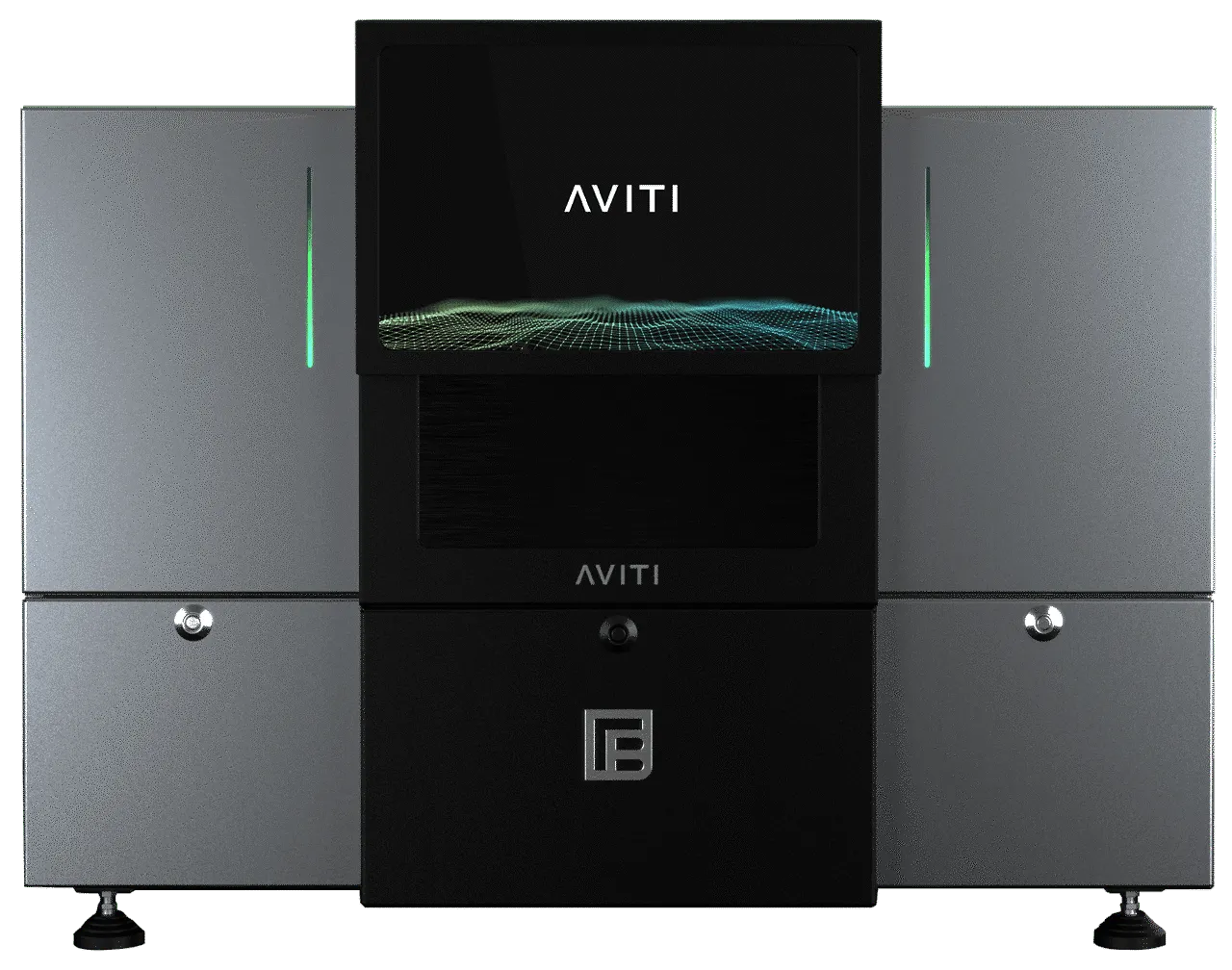
Next-generation sequencing (NGS) has become central to cancer research, enabling unbiased, base-pair-resolution profiling of the genomic alterations that drive tumours. This guide covers why NGS matters in oncology, its major applications, and how to select the right sequencing platform for your cancer research programme.
Why NGS Matters in Cancer Research
Biological rationale
Cancer is fundamentally a disease of genomic alteration — driven by somatic and germline variants including single nucleotide variants (SNVs), structural/large variants, copy number alterations, and epigenetic dysregulation.
Tumours are heterogeneous (intratumoural, intertumoural, and temporal heterogeneity via clonal evolution), which single-gene or low-multiplex assays can't capture.
NGS enables simultaneous, unbiased interrogation of thousands of genomic loci at base-pair resolution — something Sanger sequencing or targeted PCR panels can't scale to.
Key advantages over legacy methods
Massively parallel sequencing via NGS allows high throughput at falling cost per base.
Detects multiple variant classes in one assay: SNVs, indels, CNVs, fusions/structural variants, and methylation.
Lower input requirements, which is critical for FFPE and limited biopsy material.
Quantitative allele frequency data, enabling clonal architecture and low-VAF subclone detection.
Current Applications in Cancer Research
1. Tumor genomic profiling / precision oncology — Hotspot and comprehensive panels (e.g., targeted solid tumour panels) for actionable driver mutations (EGFR, KRAS, BRAF, etc.), and comprehensive genomic profiling (CGP) linking mutations to targeted therapies and clinical trial eligibility.
2. Biomarker discovery and companion diagnostics — Tumor mutational burden (TMB), microsatellite instability (MSI), dMMR status, and PD-L1-associated signatures serve as biomarkers for immunotherapy response.
3. Liquid biopsy / ctDNA analysis — Minimal residual disease (MRD) monitoring, early relapse detection, and treatment response tracking. Requires ultra-sensitive chemistries and ultra-high sequencing coverage given low ctDNA fractions.
4. RNA-seq applications — Fusion transcript detection (critical for paediatric and lung cancers where fusions are the major causal variants), expression profiling, splice variant detection, and immune repertoire/TCR-seq.
5. Epigenomics — Methylation sequencing for tumor classification, cell-of-origin deconvolution, and epigenetic silencing of tumor suppressors.
6. Single-cell and spatial genomics — Resolving intratumoural heterogeneity, clonal evolution, and tumour microenvironment/immune infiltrate characterization.
7. Germline testing — Hereditary cancer syndrome screening, especially relevant to paediatric oncology and cascade testing in families.
8. CNV and structural variant detection — WGS or WES approaches for genome-wide copy number or structural variant (large insertions/deletions) architecture.
9. Functional genomics / target discovery — CRISPR screens and optical pooled screens linking genotype to phenotype for drug target identification.
Key Considerations When Selecting an NGS Platform
1. Application fit — Panel-based targeted sequencing vs. WES vs. WGS vs. RNA-seq: throughput and depth needs differ enormously. Does the platform support the chemistries you need (e.g., long-read for structural variants/fusions, short-read for cost-efficient depth, accurate chemistries for difficult regions such as homopolymers and indels)?
2. Sample type compatibility — FFPE tolerance is a major differentiator: degraded, cross-linked, low-quality/quantity DNA needs robust library prep chemistry and platforms. Low-input/liquid biopsy compatibility matters if ctDNA work is planned.
3. Accuracy and error profile — Raw base-calling error rates, systematic errors (e.g., homopolymer issues), and how these interact with low-VAF somatic variant calling. Availability of UMI/molecular barcoding support for error suppression.
4. Throughput and turnaround time — Sample volume expectations (research cohort vs. clinical-adjacent translational work) drive whether a benchtop or high-throughput instrument makes sense. Consider run time, multiplexing capacity, and automation integration for large-volume processing.
5. Read length — Short-read is cost-efficient with a mature bioinformatics ecosystem, ideal for SNV/indel detection. Long-read is better for structural variants, phasing, and fusion breakpoints, but costlier.
6. Secondary analysis and bioinformatics ecosystem — Compatibility with established pipelines (DRAGEN, GATK-based workflows), FASTQ/BAM interoperability across platforms, and availability of validated variant callers and reference panels for benchmarking.
7. Reagent and consumable economics — Cost per sample at your expected volume, reagent shelf-life, batch-to-batch consistency, and vendor supply chain reliability for continuity in longitudinal studies.
AVITI's Core Technology Differentiator
AVITI uses avidity base chemistry rather than traditional sequencing-by-synthesis (SBS). Instead of single fluorescent nucleotides binding one at a time, it uses multivalent ligands that bind multiple nucleotide targets simultaneously, increasing ligand affinity and residence time — which improves base-calling accuracy while reducing reagent volumes to nanomolar scale. This is the mechanistic reason AVITI tends to post strong quality metrics.
Where AVITI Fits in the Broader Market
| Platform | Strength for cancer research | Tradeoff |
|---|---|---|
| Illumina (NovaSeq/NextSeq) | Market-standard, deepest bioinformatics ecosystem, broadest panel/kit vendor support | Higher reagent cost at scale; SBS chemistry error modes are well-characterized but not always favorable vs. avidity on Q30 |
| AVITI / VITARI | Very strong Q30/accuracy in both SNV and indel calling, benchtop flexibility, lower reagent cost, good FFPE coverage uniformity, DRAGEN-compatible secondary analysis | Smaller installed base and fewer clinically pre-validated commercial panels than Illumina, but growing rapidly with publications; historically benchtop-scale throughput, with the recently announced VITARI now catering to high-throughput users |
| MGI (DNBSEQ) | Cost-competitive, high throughput at scale | Geopolitical/export restrictions in some markets; less penetration in US clinical labs |
| PacBio / Oxford Nanopore (long-read) | Superior for structural variants, fusion breakpoints, phasing, and complex rearrangements | Higher per-base error (improving), less mature for high-depth somatic SNV/low-VAF calling; costlier at panel-scale depth |
| Ultima Genomics | Very low cost per genome at high throughput | Newer platform, less track record in oncology-specific validation, less favourable indel accuracy which is critical in cancer research |
Bottom Line for Cancer Research Applications
AVITI/VITARI is a strong fit when:
You need flexible, small-batch to large-batch runs (not every lab can wait to fill a NovaSeq flow cell, alongside reporting turnaround-time constraints).
FFPE/liquid biopsy coverage uniformity and low error rate matter more than raw throughput.
Analytic accuracy and ultra-sensitive variant detection with minimal false positives/negatives are priorities.
Output file/FASTQ cross-compatibility with 3rd-party analysis pipelines is required.
You want reagent cost efficiency without the constraints of large batching requirements.
Multi-omics capability of AVITI24 enables integration of spatial, sample morphology, RNA, and protein markers into cancer research — unveiling cancer pathway mechanics rather than relying heavily on DNA × phenotype associations.