Multi-omics in cancer research is reshaping how tumors are understood — moving beyond the genome to layer in epigenetic, spatial, and functional data. This overview looks at where the field stands, the gaps that remain, and the cancer sequencing technologies and profiling tools addressing them, from genomic sequencing and spatial multi-omics to DNA methylation sequencing and functional profiling.
Where the Field Stands
Cancer research has made real progress. Targeted therapies, immune checkpoint inhibitors and cell-based treatments have turned some fatal conditions manageable. Comprehensive genomic profiling (CGP) is now routine at many oncology centers, and liquid biopsy research is moving from the lab into clinical practice.
Even so, the gaps are clear:
• Genotype does not predict response well. Two tumors with the same driver mutation can behave very differently — sequence tells us what is encoded, not what is functionally active.
• Bulk analysis (e.g. tissue DNA extraction for sequencing) hides tumor interaction architecture. Tumors are spatially organized ecosystems of cancer, immune and stromal cells, and grinding up tissue averages away the interactions that drive resistance and immune evasion.
• Detection and monitoring come late. Residual disease and early recurrence are hard to catch with mutation-based approaches alone, especially when tumor ctDNA in blood is scarce.
• Sample quality limits data quality. Clinical material is often degraded FFPE tissue or low-input ctDNA, which punishes methods that need intact DNA.
• Access to molecular diagnostics is uneven. Advanced profiling is concentrated in a few well-funded labs; samples are shipped abroad, and results and treatment decisions are delayed. Cohorts from Southeast Asia and other regions are also underrepresented in the data that shapes the field.
These gaps drove the direction of cancer research toward more accurate and affordable sequencing, spatial and single-cell resolution, decentralized clinical-grade testing, and additional layers of biology beyond DNA sequence. Several tools have emerged to address this evolution, described below.
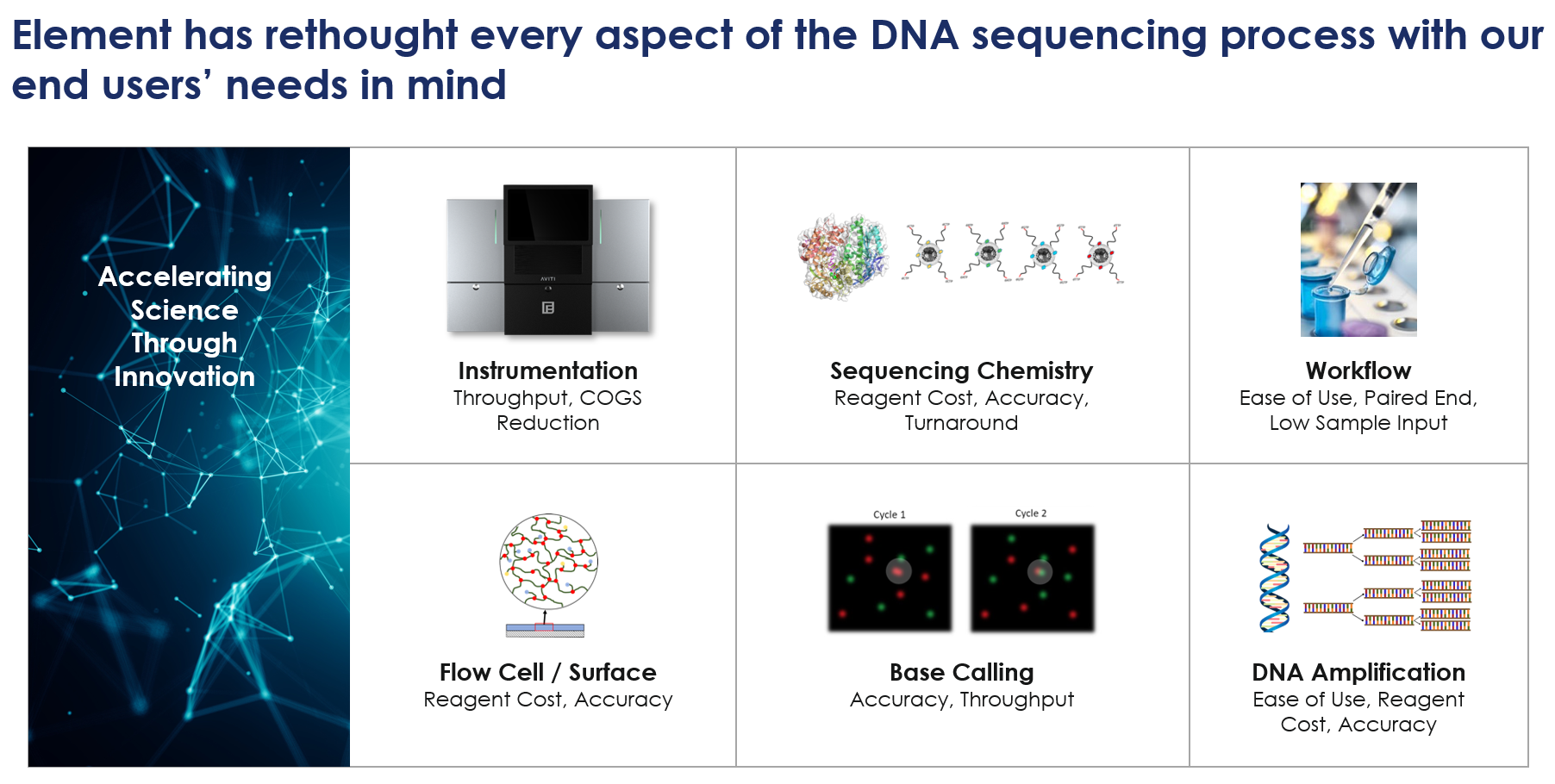
Sequencing Accuracy and Cost: AVITI
Somatic variant calling in cancer is often a signal-vs-noise problem. A variant at 1–2% allele frequency in an FFPE sample sits close to the error threshold of sequencing chemistry, and distinguishing real variants from errors and artifacts is where many false positives, false negatives, and ambiguous calls come from.
Element Biosciences' AVITI platform uses avidity sequencing — multivalent binding to read bases rather than relying only on conventional monovalent chemistries such as sequencing-by-synthesis — aiming for higher raw accuracy and lower reagent consumption per base. For oncology, this helps in three ways:
• Low-frequency variant detection — cleaner base calls improve confidence at the low allele fractions that matter for sub-clonal populations and residual disease.
• Less tolerance for noise in downstream pipelines — better raw data reduces the filtering and manual review needed in secondary analysis.
• Economics for mid-sized labs — a benchtop system with lower cost per sample makes in-house sequencing realistic for hospitals and institutes that currently outsource it, democratizing the technology toward local accessibility.
Spatial Context: AVITI24 Cytos
Bulk and dissociated single-cell data lose the spatial context of tumor interaction. Whether cytotoxic T-cells reach the tumor core or stay at the periphery, how a resistant clone sits next to its neighbors, and the state of the tumor microenvironment, ECM, and blood capillary networks all affect treatment response — and are invisible without spatial context.
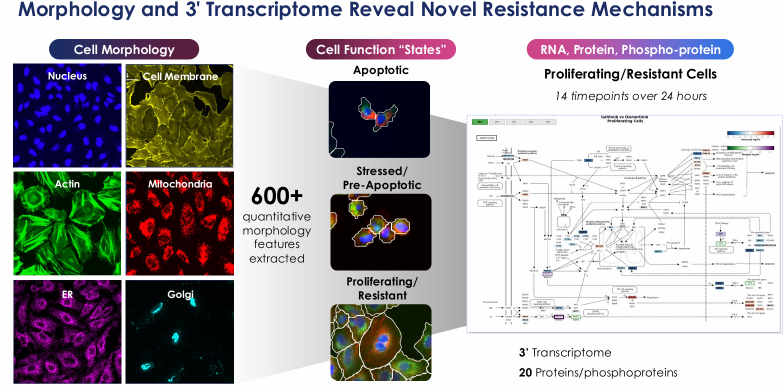
AVITI24 Cytos extends the AVITI system toward in situ profiling, reading RNA, protein, and cell morphology data in intact cells while preserving their spatial context. Its relevance to cancer research includes:
• Mapping the tumor microenvironment — relating immune infiltration and signalling, stromal organization, and tumor cell states to each other through tumor microenvironment analysis.
• Linking genomic findings to phenotype — a variant called by sequencing can be examined in its intact cellular setting, helping explain why genotype alone is often insufficient as a predictor. This enables more accurate pathway mapping and better marker selection for diagnostics and treatments.
• Workflow consolidation — running spatial multi-omics on the same sequencing platform reduces the number of instruments, data formats, and training burdens in a translational lab.
Decentralized Clinical-grade Profiling: Sophia DDM and MSK-IMPACT
MSK-IMPACT, developed at Memorial Sloan Kettering, is one of the best-characterized comprehensive genomic profiling assays, with an extensive evidence base behind its variant interpretation. Historically, access meant sending samples to a central laboratory — adding logistics, delays and cost, and a real barrier in regions where shipping tissue internationally is slow or impractical.
Sophia Genetics' approach pairs the MSK-IMPACT assay with its Sophia DDM analytics platform, so library prep, sequencing and interpretation can happen locally. This speaks to several gaps at once:
• Turnaround time — a result in days rather than weeks is more likely to inform first-line treatment decisions.
• Standardized interpretation — a shared variant-annotation and reporting framework helps different hospitals produce comparable results, which matters for multi-center studies and trials.
• Local capability building — laboratories develop expertise, and populations underrepresented in global datasets can contribute to them rather than relying on data generated elsewhere.
• Collective learning — pooled, anonymized insights across sites improve variant classification over time, especially valuable for variants rare in Western cohorts.
The Epigenetic Layer: Watchmaker TAPS+ Methyl-seq
DNA methylation reflects tissue of origin, cell state and early oncogenic change, and cancer-specific methylation patterns in cell-free DNA are among the most promising signals for early detection, minimal residual disease monitoring, and tracing the primary site in cancers of unknown origin.
The practical obstacle has been bisulfite conversion, the standard method: it degrades a large fraction of the input DNA and reduces sequence complexity — hurting exactly where cancer samples are weakest (FFPE material and low-concentration cfDNA). Watchmaker Genomics' TAPS+ methyl-seq uses an enzymatic approach that avoids bisulfite's harsh chemistry, offering:
• Better DNA preservation with gentler chemistry, so rare and precious samples contribute more to the result.
• Improved coverage uniformity and more reliable mapping, because the genome retains more of its nucleotide diversity.
• Feasibility with low input, central to liquid biopsy and low-allele-fraction applications.
DNA methylation sequencing adds a layer that complements mutation-based panels. A tumor can be tracked even when its known mutations are below detection, and early-stage signals may appear before clear genomic changes do.
The Functional Layer: QF-Pro
Genomic, epigenomic and spatial data all describe states, but cancer is ultimately driven by molecular interactions — a receptor dimerizing, a signalling complex forming, or a drug engaging its intended target. These events are difficult to infer from sequence or expression alone.
FRET-FLIM measures protein-protein proximity directly in cells and tissue at nanometer scale. Because it reads fluorescence lifetime rather than intensity, it is less sensitive to concentration differences, photobleaching and optical artifacts than intensity-based FRET. Hawk Biosystems' QF-Pro integrates this principle into a standardized functional cancer profiling assay, which can help with:
• Target engagement — confirming whether a candidate drug is actually interacting with its intended target, rather than using drug abundance as a proxy.
• Pathway activity — testing whether a signaling pathway is active or inactive in a given tumor, as opposed to just carrying a genomic variant.
• Explaining discordance — investigating why tumors with the same mutation respond differently, by measuring the interaction state downstream of the mutation.
This targets one of the biggest conceptual gaps: moving from “what mutations are present” to “what the tumor's biology is actually doing.” Explore our spatial proteomics solutions for more on functional profiling.
What Addressing These Gaps Would Mean for Cancer Research
If these gaps are tackled, the benefits build on one another:
• Better patient stratification — combining genomic, epigenomic, spatial and functional data explains more of the variation in response, so fewer patients receive therapies unlikely to work and more are matched to ones that will.
• Earlier and more sensitive detection — methylation-based and ultra-accurate sequencing methods push detection and recurrence monitoring earlier, when interventions are more effective.
• Smarter trials — biomarkers that reflect function and tissue context, not just genotype, let trials better shortlist likely responders, shortening development and reducing failures.
• Mechanistic insight into resistance — seeing the spatial and interaction level helps explain relapse rather than inferring it, opening the way to rational combination strategies.
• More representative evidence — when sites in Southeast Asia and other underrepresented regions generate their own high-quality data, variant databases, risk models and biomarkers reach more of the world's patients.
• Faster translation — with decentralized testing and shared analysis frameworks, the interval between a research insight and routine care gets shorter.
Addressing these gaps shifts the field closer to a “complete picture of a cancer” — not a list of mutations, but a multi-layered, spatially resolved, functionally tested model of how a patient's cancer behaves. Reaching that goal depends as much on validation, standardization and local access to the technologies. Velgen Technik plays the accessibility part, bridging these cutting-edge tools to more of the world and enabling Southeast Asia to join the global shift in cancer research. Talk to our team to learn more.