
ID3EAL™ PanoramiR miRNA Knowledge Panel
Minimal Input, Maximum Insight
Targeted miRNA profiling is an effective way to discover biomarkers for disease diagnosis and guiding treatment.

The ID3EAL PanoramiR Knowledge Panel is an effective approach for profiling miRNAs important in biological processes, disease mechanisms, or biomarker discovery for clinical applications such as disease diagnosis and prognosis, disease stratification or treatment selection.
Achieve More with Less
- Expertly curated disease associated panel generates meaningful insights.
- Highly sensitive and robust technology detects lowly expressed miRNAs with minimal sample input.
- Relevance to over 20 diseases including cancers, dementias, cardiovascular disease, liver diseases and more.
- Relevance to various sample types including plasma, serum and solid tissues.
Optimal Use Experience
- Ready-to-use qPCR plate with pre-spotted primers
- Pre-wet lab validated multiplexed RT primer pools and qPCR assays
- Reagents pre-aliquoted into experimentally relevant proportions
- Spike-in RNA controls included
- Semi-automated data analysis template for normalization, fold-change results and data visualizations
Speedy Workflow
RNA-to-Ct in 3 hours to 4 hours with a pre-amplification step to enhance detection with very limiting amounts of starting material.
A Panorama of Pathologies
| Category | Examples | microRNA Targets |
|---|---|---|
| Cardiovascular | Cardiovascular Disease (e.g. stroke, coronary artery diseases, etc) | 140 |
| Metabolic | Diabetes, Liver Cancer | 358 |
| Neurological | Alzheimer's Disease, Dementia, Depression, CNS Cancer | 114 |
| Respiratory | Lung Disease, Lung Cancer | 165 |
| Urological | Kidney Disease, Bladder Cancer | 51 |
| Reproductive | Cervical Cancer, Prostate Cancer | 319 |
| Gastrointestinal | Stomach Cancer, Colorectal Cancer | 224 |
| Hematological | Leukemia, Lymphoma | 150 |
The ID3EAL Technology
The Problem
MicroRNAs (miRNAs) are notoriously difficult to quantify accurately due to their high degree of homology and small size. Their low abundance in circulation further aggravates this difficulty. Interestingly, increasing evidence shows that low abundant miRNA targets in biofluids carry diagnostic value for early detection of diseases. Hence, there is mounting demand for improved detection and quantification methods, especially since their promise as novel diagnostic and prognostic biomarkers for multiple human diseases is just being realized.
The small size of microRNAs makes detection extremely difficult. Less than 100 miRNAs are robustly detected in biofluids. Nat Methods. 2014 Aug;11(8):809-15.
Our Solution
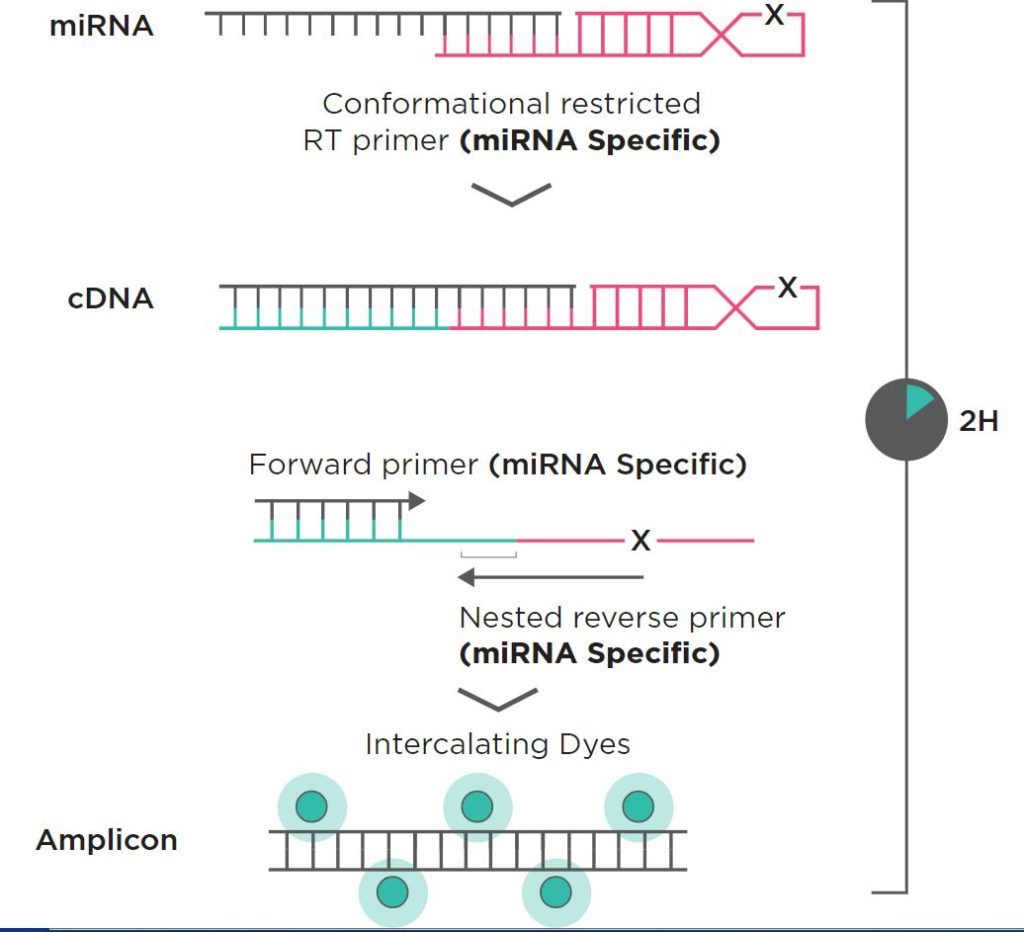
A unique three primer approach for sensitivity, specificity and robustness. Uniquely designed stem-loop primer minimizes generation of non-specific cDNA. MicroRNA-specific forward and reverse qPCR primers designed for robust amplification of intended target while preventing amplification of mismatched targets.
Video
Watch the animated walkthrough of our technology below.
ID3EAL™ PanoramiR miRNA Knowledge Panel
Minimal Input, Maximum Insight
Research Citation
Mirxes Citations Table of Content
| No. | Website | Category | Citation |
|---|---|---|---|
| 1 | mdpi.com | Early Cancer Detection | F. Van Der Sijde et al., “Serum miR-373-3p and miR-194-5p Are Associated with Early Tumor Progression during FOLFIRINOX Treatment in Pancreatic Cancer Patients: A Prospective Multicenter Study,” International Journal of Molecular Sciences, vol. 22, no. 20, p. 10902, Oct. 2021, doi: 10.3390/ijms222010902. |
| 2 | sciencedirect.com | Early Cancer Detection | K. Y. Chung, J. M. Quek, S. H. Neo, and H. P. Too, “Polymer-Based Precipitation of Extracellular Vesicular miRNAs from Serum Improve Gastric Cancer miRNA Biomarker Performance,” Journal of Molecular Diagnostics, vol. 22, no. 5, pp. 610–618, Mar. 2020, doi: 10.1016/j.jmoldx.2020.01.016. |
| 3 | sciencedirect.com | Early Cancer Detection | S.-F. Chan, H. Cheng, K. K.-R. Goh, and R. Zou, “Preanalytic methodological considerations and sample quality control of circulating MIRNAs,” Journal of Molecular Diagnostics, vol. 25, no. 7, pp. 438–453, Apr. 2023, doi: 10.1016/j.jmoldx.2023.03.005. |
| 4 | nature.com | Early Cancer Detection | R. Zou et al., “Development and validation of a circulating microRNA panel for the early detection of breast cancer,” British Journal of Cancer, vol. 126, no. 3, pp. 472–481, Jan. 2022, doi: 10.1038/s41416-021-01593-6. |
| 5 | nature.com | Early Cancer Detection | L. Z. Hong et al., “Systematic evaluation of multiple qPCR platforms, NanoString and miRNA-Seq for microRNA biomarker discovery in human biofluids,” Scientific Reports, vol. 11, no. 1, Feb. 2021, doi: 10.1038/s41598-021-83365-z. |
| 6 | link.springer.com | Early Cancer Detection | F. S. P. Delek et al., “MIR-3653-3P Expression in PBMCS: Unveiling the Diagnostic potential for ovarian cancer,” Biochemical Genetics, May 2024, doi: 10.1007/s10528-024-10819-0. |
| 7 | wjgnet.com | Early Cancer Detection | X.-L. Zhu et al., “Plasma microRNAs as potential new biomarkers for early detection of early gastric cancer,” World Journal of Gastroenterology, vol. 25, no. 13, pp. 1580–1591, Apr. 2019, doi: 10.3748/wjg.v25.i13.1580. |
| 8 | pnas.org | Early Cancer Detection | L. Ying et al., “Development of a serum miRNA panel for detection of early stage non-small cell lung cancer,” Proceedings of the National Academy of Sciences, vol. 117, no. 40, pp. 25036–25042, Sep. 2020, doi: 10.1073/pnas.2006212117. |
| 9 | link.springer.com | Early Cancer Detection | F. Y. Özdenoğlu et al., “High Expression of miR-218-5p in the Peripheral Blood Stream and Tumor Tissues of Pediatric Patients with Sarcomas,” Biochemical Genetics, vol. 63, no. 4, pp. 3313–3328, Jul. 2024, doi: 10.1007/s10528-024-10873-8. |
| 10 | link.springer.com | Early Cancer Detection | H. Masoumeh, D. Tunay, Ö. A. Demet, T. Samuray, and Y. Hülya, “Exploring of miR-155-5p, miR-181b-5p, and miR-454-3p Expressions in Circulating Cell-Free RNA: Insights from Peripheral Blood of Uveal Malignant Melanoma Patients,” Biochemical Genetics, vol. 63, no. 4, pp. 3187–3205, Jun. 2024, doi: 10.1007/s10528-024-10849-8. |
| 11 | mdpi.com | Early Cancer Detection | R. Zou et al., “Development of a microRNA panel for classification of abnormal mammograms for breast cancer,” Cancers, vol. 13, no. 9, p. 2130, Apr. 2021, doi: 10.3390/cancers13092130. |
| 12 | mdpi.com | Early Cancer Detection | E. Dama et al., “Biomarkers and lung cancer early detection: state of the art,” Cancers, vol. 13, no. 15, p. 3919, Aug. 2021, doi: 10.3390/cancers13153919. |
| 13 | mdpi.com | Food Science | E. Martino et al., “Milk exosomal MIR-27B worsen endoplasmic reticulum stress mediated colorectal cancer cell death,” Nutrients, vol. 14, no. 23, p. 5081, Nov. 2022, doi: 10.3390/nu14235081. |
| 14 | onlinelibrary.wiley.com | Healthy Longevity | A. C. Rodrigues, Y. J. Heng, and F. J. Slack, “Extracellular vesicle‐encapsulated miR‐30c‐5p reduces aging‐related liver fibrosis,” Aging Cell, Sep. 2024, doi: 10.1111/acel.14310. |
| 15 | link.springer.com | Infectious Disease | N. Petejova et al., “Expression and 7-day time course of circulating microRNAs in septic patients treated with nephrotoxic antibiotic agents,” BMC Nephrology, vol. 23, no. 1, Mar. 2022, doi: 10.1186/s12882-022-02726-6. |
| 16 | mdpi.com | Infectious Disease | A. Gedikbasi et al., “The effect of host mIRNAs on prognosis in COVID-19: MIRNA-155 may promote severity via targeting suppressor of cytokine signaling 1 (SOCS1) gene,” Genes, vol. 13, no. 7, p. 1146, Jun. 2022, doi: 10.3390/genes13071146. |
| 17 | sciencedirect.com | Infectious Disease | N. D’Onofrio et al., “MiR-27b attenuates mitochondrial oxidative stress and inflammation in endothelial cells,” Redox Biology, vol. 62, p. 102681, Mar. 2023, doi: 10.1016/j.redox.2023.102681. |
| 18 | mdpi.com | Infectious Disease | C. Anastasio, I. Donisi, A. Colloca, N. D’Onofrio, and M. L. Balestrieri, “MIR-148A-3P/SIRT7 axis relieves Inflammatory-Induced endothelial dysfunction,” International Journal of Molecular Sciences, vol. 25, no. 10, p. 5087, May 2024, doi: 10.3390/ijms25105087. |
| 19 | link.springer.com | Infectious Disease | E. Martino et al., “MiR-15b-5p and PCSK9 inhibition reduces lipopolysaccharide-induced endothelial dysfunction by targeting SIRT4,” Cellular & Molecular Biology Letters, vol. 28, no. 1, Aug. 2023, doi: 10.1186/s11658-023-00482-5. |
| 20 | link.springer.com | Neuroscience | V. Manzini et al., “miR-92a-3p and miR-320a are Upregulated in Plasma Neuron-Derived Extracellular Vesicles of Patients with Frontotemporal Dementia,” Molecular Neurobiology, Aug. 2024, doi: 10.1007/s12035-024-04386-z. |
| 21 | frontiersin.org | Neuroscience | Q. S. Li, D. Galbraith, R. L. Morrison, M. H. Trivedi, and W. C. Drevets, “Circulating microRNA associated with future relapse status in major depressive disorder,” Frontiers in Psychiatry, vol. 13, Aug. 2022, doi: 10.3389/fpsyt.2022.937360. |
| 22 | alz-journals.onlinelibrary.wiley.com | Neuroscience | G. K. Sandhu et al., “MicroRNA expression based on toxic Oligomeric Amyloid Beta and Burden of Cerebrovascular Disease,” Alzheimer S & Dementia, vol. 19, no. S15, Dec. 2023, doi: 10.1002/alz.075494. |
| 23 | journals.plos.org | Neuroscience | R. Novobilský, P. Kušnierová, D. Štěpán, P. Bártová, D. Stejskal, and M. Bar, “Identification and evaluation of potential microRNA markers for diagnostics in neurodegenerative diseases and correlation with other biochemical markers,” PLoS ONE, vol. 20, no. 10, p. e0333801, Oct. 2025, doi: 10.1371/journal.pone.0333801. |
| 24 | mdpi.com | Neuroscience | T. Miyano, M. Hirouchi, N. Yoshimura, K. Hattori, T. Mikkaichi, and N. Kiyosawa, “Plasma microRNAs Associate Positive, Negative, and Cognitive Symptoms with Inflammation in Schizophrenia,” International Journal of Molecular Sciences, vol. 25, no. 24, p. 13522, Dec. 2024, doi: 10.3390/ijms252413522. |
| 25 | link.springer.com | Oncology | M. S. B. Masroni et al., “MicroRNA expression signature as a biomarker in the diagnosis of nodal T-cell lymphomas,” Cancer Cell International, vol. 24, no. 1, Jan. 2024, doi: 10.1186/s12935-024-03226-3. |
| 26 | peerj.com | Oncology | K. Supradit et al., “Differential circulating miRNA profiles identified miR-423-5p, miR-93-5p, and miR-4532 as potential biomarkers for cholangiocarcinoma diagnosis,” PeerJ, vol. 12, p. e18367, Dec. 2024, doi: 10.7717/peerj.18367. |
| 27 | spandidos-publications.com | Oncology | E. Nweke and M. Brand, “Downregulation of the let‑07 family of microRNAs may promote insulin receptor/insulin‑like growth factor signalling pathways in pancreatic ductal adenocarcinoma,” Oncology Letters, vol. 20, no. 3, pp. 2613–2620, Jul. 2020, doi: 10.3892/ol.2020.11854. |
| 28 | pubs.rsc.org | Oncology | S. Detassis et al., “SA-ODG platform: a semi-automated and PCR-free method to analyse microRNAs in solid tissues,” The Analyst, vol. 149, no. 15, pp. 3891–3899, Jan. 2024, doi: 10.1039/d4an00783b. |
| 29 | hpbonline.org | Oncology | F. Van Der Sijde, E. Vietsch, and C. Van Eijck, “Circulating micrornas associated with the systemic immune-inflammation index and prognosis in resectable pancreatic cancer,” HPB, vol. 22, p. S232, Jan. 2020, doi: 10.1016/j.hpb.2020.04.087. |
| 30 | cell.com | Oncology | S. B. Tuncer et al., “Aberrant miR-3135b and miR-1273g-3p expression in the peripheral blood samples of BRCA1/2 (±) ovarian cancer patients,” Heliyon, vol. 10, no. 1, p. e23876, Dec. 2023, doi: 10.1016/j.heliyon.2023.e23876. |
| 31 | nature.com | Oncology | S. H. Neo, K. Y. Chung, J. M. Quek, and H.-P. Too, “Trehalose significantly enhances the recovery of serum and serum exosomal miRNA from a paper-based matrix,” Scientific Reports, vol. 7, no. 1, Nov. 2017, doi: 10.1038/s41598-017-16960-8. |
| 32 | mdpi.com | Oncology | S. S.-S. Hue et al., “Tissue-Specific microRNA expression profiling to derive novel biomarkers for the diagnosis and subtyping of small B-Cell lymphomas,” Cancers, vol. 15, no. 2, p. 453, Jan. 2023, doi: 10.3390/cancers15020453. |
| 33 | mdpi.com | Oncology | G. Z. L. Tan et al., “MicroRNA Landscape in Endometrial Carcinomas in an Asian population: Unraveling Subtype-Specific Signatures,” Cancers, vol. 15, no. 21, p. 5260, Nov. 2023, doi: 10.3390/cancers15215260. |
| 34 | mdpi.com | Oncology | E. Martino et al., “MIR-148A-3P promotes colorectal cancer cell ferroptosis by targeting SLC7A11,” Cancers, vol. 15, no. 17, p. 4342, Aug. 2023, doi: 10.3390/cancers15174342. |
| 35 | jstage.jst.go.jp | Pharmacology | H. Kandori et al., “Lobular distribution of enhanced expression levels of heat shock proteins using in-situ hybridization in the mouse liver treated with a single administration of CCl4,” Journal of Toxicologic Pathology, Jan. 2023, doi: 10.1293/tox.2023-0053. |
| 36 | mdpi.com | Pharmacology | W. H. Chng et al., “Extracellular vesicles and their mimetics: A comparative study of their pharmacological activities and immunogenicity profiles,” Pharmaceutics, vol. 15, no. 4, p. 1290, Apr. 2023, doi: 10.3390/pharmaceutics15041290. |
| 37 | doi.org | Oncology | The miR-362-3p/BCLAF1 axis regulates cisplatin efficacy in triple-negative breast cancer, doi: 10.64898/2026.03.09.26347941. |
| 38 | doi.org | Neuroscience | African Green Monkey Cerebrospinal Fluid miRNome Captures Conserved miRNAs Relevant to Human Neurodegenerative Disease, doi: 10.64898/2026.08.07.743104. |