
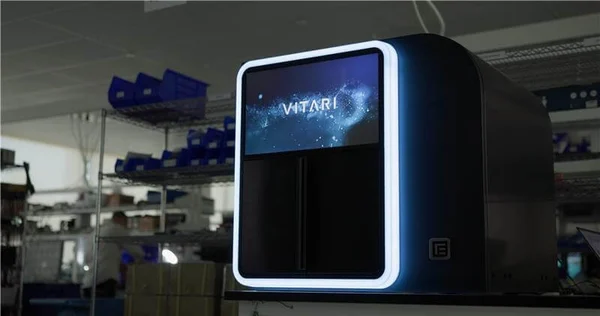
For years, the field of next-generation sequencing (NGS) has been defined by a frustrating trade-off. Researchers could either access the massive throughput of high end systems for running cost efficiency, sacrificing flexibility and paying a premium; or they could opt for smaller, more flexible benchtop sequencers but scale their studies more slowly at a higher running cost. Element Biosciences, has introduced VITARI™ —a new benchtop platform that aims to break this compromise, offering a $100 genome with the operational flexibility of a much smaller instrument.
Introduction to VITARI: Scale Without the Premium
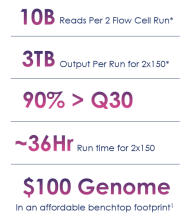
*Performance metrics, including read counts, are based on sequencing Element libraries. Actual results might differ based on factors, such as library type and preparation. *1$1/Gb pricing available at volume. Multi-instrument purchase not required
Unveiled in early 2026 and scheduled to begin shipping in the second half of the year, VITARI is a high-throughput benchtop sequencing system designed to deliver massive output without the traditional constraints on large batching and intensive capital.
The platform’s headline feature is its ability to deliver up to 10 billion reads or 3 terabytes of data per dual-sided run, achieving a high-quality whole genome for as low
as $100. This price point directly challenges the established market leader, Illumina, whose comparable high-throughput NovaSeq systems offer a $200 genome. VITARI™ achieves this with >90% of bases achieving a Q30 quality score, ensuring high confidence data for demanding applications.
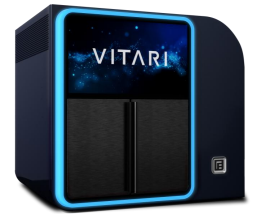
The instrument is notable for its compact benchtop footprint and simplified logistics, including ambient-temperature shipping of its reagent cartridges—a practical advantage that reduces the reliance on expensive cold-chain storage.
Cost-Efficiency and Operational Flexibility: The Core of VITARI™
Perhaps the most significant innovation of the VITARI™ platform is its architecture, which directly addresses the inefficiencies of forced batching that plague many high throughput systems. VITARI features two independent flow cells, each divided into six individually addressable lanes.
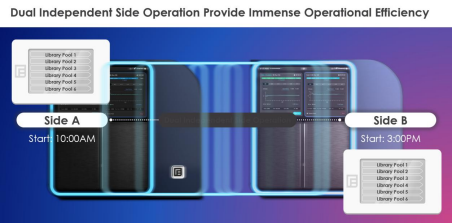
This “dual-sided, multi-lane” design provides a level of operational flexibility previously unseen in a system of this scale. Researchers can initiate a run on one flow cell with a full batch of samples, while keeping the other flow cell idle for a different project that may be ready later in the day. Within a single flow cell, individual lanes can be assigned to entirely different experiments. This modularity allows laboratories to keep the instrument productive every day, eliminate delays, and scale their studies without waiting to fill an entire, expensive run.
In a competitive market where pricing advantage through bulk sequencing has become a primary battleground, VITARI’s combination of low per-genome cost and high scheduling flexibility positions it as a powerful tool for maximizing laboratory efficiency and research output.
Powering Genomics and Clinical Research Workflows
By dramatically lowering the cost barrier, VITARI™ unlocked applications for fundamental biology to clinical research at a larger or population-wide scale. Key supported workflows include:
Whole-Genome and Exome Sequencing: The $100 genome economics make large scale population studies, rare disease research, and newborn health screening more accessible than ever before, allowing scientists to design studies around biological questions rather than budget constraints.
Clinical Oncology Research: The platform’s high throughput and sensitivity are suited for high-depth targeted sequencing, supporting the identification of rare variants and enabling rapid iteration in cancer research workflows.
Transcriptomics: VITARI™ can significantly lower the per-sample cost for bulk and single-cell RNA-seq experiments, facilitating complex gene expression studies across more replicates and conditions.
Furthermore, Element has engineered VITARI™ with a clear roadmap for future upgrades, including the ability to perform direct in-sample multiomics, bringing the combined analysis of RNA, protein, morphology and spatial context onto a single platform, similar to the capabilities of the AVITI24 system.
Positioning VITARI™ in the Current Genomics Landscape
VITARI completes Element Biosciences’ portfolio, creating a cohesive product line that allows labs to “right-size” their sequencing capacity. The family now includes:
• AVITI LT: For low-throughput, targeted applications.
• AVITI: A versatile mid-throughput workhorse.
• AVITI24: A specialized 5D multiomics system for direct in-sample analysis. • VITARI: The new flagship for high-throughput, population-scale studies.
In the grand scheme of things, VITARI™ can be positioned against Illumina’s NovaSeq (and other high-throughput platforms) where VITARI™ could enjoy similar ($200) or lower cost per genome with significantly reduced batching requirements (as compared to NovaSeq), offers more operational flexibility, and no compromise or better in sequencing quality. Given that Element’s previous platforms (AVITI and AVITI24) have validated the accuracy of the underlying Avidite Base Chemistry, the scientific community will be eagerly anticipating that VITARI could turn high-throughput, flexibility, affordable genomics and high quality data with minimal trade-off constraints into a standard reality.